
John Scott on Leadership, Longevity & Fellowship
YouTube | Spotify | Apple Podcasts | Amazon Music | iHeart Radio | Audible
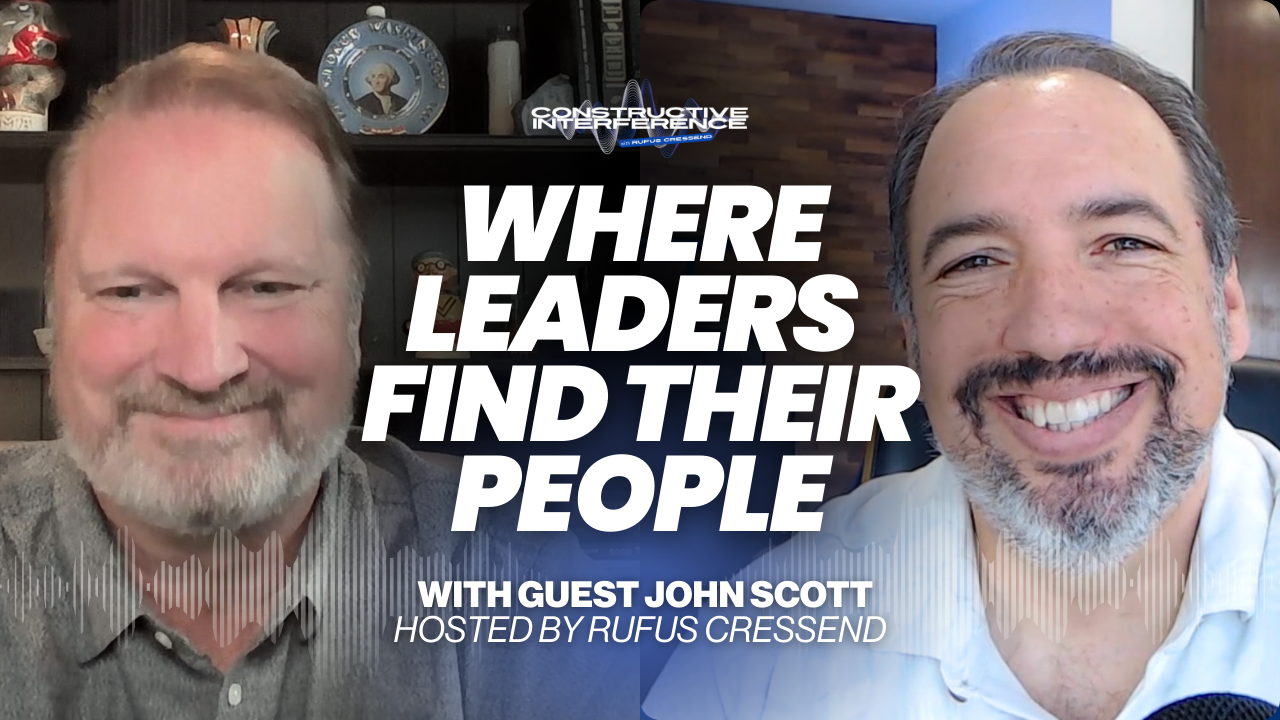
“We all have the same issues: management issues, money issues, planning issues”
What does it look like when a visionary leader thinks beyond today — beyond quarterly goals, beyond short-term wins, beyond his own title, and starts building something designed to last?
In this episode, Rufus sits down with John Scott, President and CEO of Westminster American Insurance Company, to explore exactly that. John shares how he transformed a struggling regional insurer into a multi-state company approaching $100 million in written premium — and why one of the most underrated forces in leadership isn’t strategy, charisma, or talent… it’s fellowship.
Through candid reflection and hard-won insight, John and Rufus uncover what separates leaders who survive from those who endure.
From Operator to Owner
John didn’t stumble into success — he built it with intention.
He talks about the mindset shift every founder must make: from operator to owner. Instead of being the center of every decision, the best leaders learn to:
hire leaders who can think without them,
build systems that don’t require their constant presence,
and design organizations that can run without them one day.
This shift isn’t just about delegation — it’s about legacy.
As John puts it, the goal isn’t to be indispensable — it’s to build something that doesn’t depend on you.
The Loneliness at the Top — and What Changes It
One of the most striking themes in this conversation is how isolating leadership can feel — even when surrounded by people. John shares the very real experience of shouldering responsibility without peers who truly understand it.
That’s where fellowship comes in.
John describes what it’s like to sit in a room with other leaders — not to be taught what to do, but to finally hear that you’re not alone in the challenges you face:
…we all come from different fields, different industries, yet we all have the same issues.
This is where leadership deepens: not through solitary insight, but through shared experience. Fellowship becomes a mirror — and a vehicle for clarity, confidence, and courage.
Execution Beats Ideas
Vision is powerful — but execution is what builds companies.
John emphasizes that ideas alone don’t drive growth. It’s disciplined execution, rigorous systems, and accountability that turn vision into reality. He talks about:
building teams that can think independently,
committing to documented processes,
and making decisions that favor long-term sustainability over short-term optics.
Growth doesn’t happen because something sounds good — it happens because it gets done.
Thinking in Decades, Not Quarters
For many founders, time is measured in quarterly targets.
For John, time is measured in decades.
He describes a leadership philosophy that always looks forward — not just to the next milestone, but to what comes after the leader has stepped aside. This long-term thinking influences every leader-level decision, from succession planning to culture design to how capital gets deployed.
Why Leaders Grow Together
What separates leaders who thrive from those who merely survive?
According to John, it’s not books, courses, or solo grind.
It’s community.
Leaders who seek out fellowship — those rooms where they can compare notes, challenge assumptions, and wrestle with hard questions — grow faster and see further.
Leadership isn’t meant to be a solo sport.
Key Takeaways
True growth happens in rooms where leaders can compare notes, challenge assumptions, and realize they are not building alone.
The goal of leadership is durability, not dependency.
Great leaders think in decades, not quarters.
People are investments, not expenses.
Legacy is built when founders design organizations that can grow beyond them.
🎧 Listen to the full conversation: YouTube | Spotify | Apple Podcasts | Amazon Music | iHeart Radio | Audible
💬 Guest: John Scott
📍 Host: Rufus Cressend, Constructive Interference
